Client Status Request

BLOG
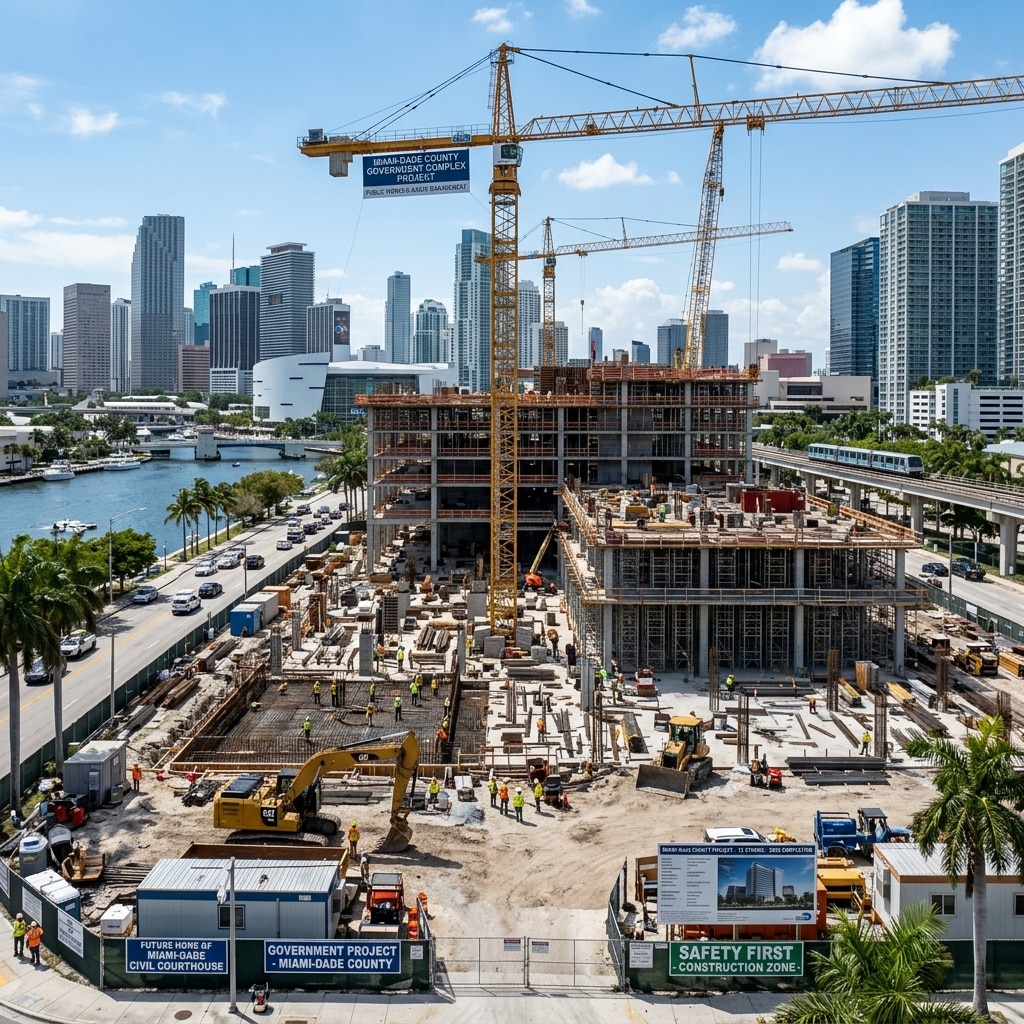
For contractors pursuing Florida government construction projects, understanding the competitive bidding process is essential. Florida’s public procurement system is designed to promote fairness, transparency and accountability while ensuring that public entities receive the best value for taxpayer dollars. An understanding of the basic requirements of the bidding process is essential for contractors and will assist in avoiding costly mistakes and improve their chances of being awarded the public contract.
Whether you are new to Florida, the bidding process or regularly compete for municipal, county, state or school district projects, understanding the fundamentals of competitive bidding in Florida is critical.
What Is Competitive Bidding?
Competitive bidding, the most common method of contracting on construction projects, follows a fairly standard pattern of steps leading to the award of the contract to the lowest responsible bidder. Competitive bidding fosters honest competition. Practices that create an unfair advantage for some of the bidders will not be permitted. Even race- and gender-based classifications designed to equalize minority representation in the bidding process will not be permitted if they create inequality in themselves. Procedures are in place, whether through administrative agencies or the courts, to handle problems, such as bid protests, bid withdrawals or amendments, or ambiguities in the bid documents.
In government contracts, competitive bidding requirements are designed to protect the public from collusive contracts and from the ill effects of official favoritism in public procurement, and to ensure fair competition among bidders for the public good. With regard to enforcing compliance with the bidding requirements, should a contract be made by public officers in violation of a competitive bidding statute, that contract is considered to be absolutely void, and no rights can be acquired thereunder by the contracting party.
Competitive bidding gives everyone a chance to bid; it fosters honest competition and ensures that a contract will be let to the lowest bidder. Although competitive bidding statutes may have originated in response to a distrust of public officers whose duty it is to award public contracts, they now serve the dual purpose of safeguarding against favoritism and giving all fair opportunity to participate.
Today the competitive bidding system is a major method of construction contracting in both the public and private sectors.
The Five Steps of the Florida Construction Bidding Process
The Florida public bidding process follows five key stages.
- Invitation to Bidders
In most bidding situations, there will first be an invitation to bidders. In federal procurement, this is called a “Request for Bids.” Invitations may be broadly published through newspapers or sent through the mail to a select group of pre-qualified bidders. Many states, as well as agencies and public bodies in Florida, require certain construction work to be performed by pre-qualified persons.
Procurement procedures for construction contracts vary widely depending on the particular agency involved, but, generally, competitive bidding is required in Florida for state construction contracts. In terms of pre-qualification, bidders are required by the Florida Department of General Services to establish, on an annual or specific project basis, that they (1) hold appropriate state licenses; (2) have sufficient bonding capacity (by a letter of intent from a surety); and (3) provide proof of insurance to the limits required by the particular project in question. After the invitation, the bidder obtains bidding information, which includes all the “rules” for the acceptance of the bid, the drawings, the specification of the job, the parties involved, the bid bond, the proposed contract, the bid proposal form, and many other documents. This, along with the invitation to bidders, constitutes the Bid Documents. After a bidder receives the bid documents, he will submit a Bid Proposal.
- Submission of Bid Proposals
The Bid Proposal is an “offer” that, with limited exceptions, is irrevocable for a certain stipulated period of time. All Bid Proposals will be opened at the Bid Opening at a time and place specified in the bid document. Missing documents, incomplete forms or failure to strictly comply with bid instructions can result in immediate disqualification.
- Bid Opening
At the Bid Opening, the owner or public body will determine who will be awarded the contract. Generally speaking, the contractor that will be selected will be the one who is the Lowest Responsible Bidder.
When opening sealed bids, all Florida state and local governmental entities must (1) open the sealed bids at a public meeting conducted in compliance with Section 286.011, Florida Statutes; (2) announce at that meeting the name of each bidder and the price submitted in the bid; and (3) make available upon request the name of each bidder and the price submitted in the bid. As such, the name of each bidder and the price of each bid shall be made public and will become a public record. While meetings may be required to be open and accessible to the public, this does not necessarily mean that members of the public may speak or participate in such meetings, absent express statutory authority to do so. Further, as Section 255.0518, Florida Statutes, requires that the opening of public bids and announcement of the name of each bidder and the price submitted in each bid be done at a public meeting subject to the requirements of §286.011, this also includes the requirement that minutes be taken and promptly recorded, and such records shall be open to public inspection. As a result, the name of each bidder and the price submitted will be made available to the public upon request, subject to the provisions of Florida’s Public Records Act.
- Selection of the Lowest Responsible Bidder
The bidder with the lowest bid will not necessarily be awarded the contract. Other factors, such as skill, financial ability, or reputation in the trade, can be considered to determine the lowest responsible bidder. In addition, the bid itself should be submitted on time and must conform to the requirements set forth in the bid invitation.
After all bids are opened and the low bidder is determined, the award is made. However, the low bidder may not always be the one whose total bid proposal was lowest. Public bodies may award a contract to the bidder who is lowest after the public body corrects mathematical mistakes and revises totals.
- Formal Award of the Contract
Once the evaluation is complete, the public entity formally awards the contract. An awarding authority need not always award a contract to the lowest bidder. To discourage unqualified bidders and to assure proper performance of contracts, the authority may award the job to the lowest “responsible” bidder, as is the case with public educational facilities in Florida. Unless the authority has acted in bad faith, committed fraud, or rendered its decision arbitrarily, courts will not set aside an award.
To determine the lowest responsible bidder, the major areas of inquiry include:
- Financial ability;
- Reputation for performance, honesty, and integrity;
- Possession of facilities for carrying out the contract;
- Ability to perform the contract in a timely fashion;
- Skill and expertise;
- Outstanding obligations; and
- Obligations then assumed or to be assumed.
Why Understanding the Bid Process Matters
Public construction projects involve unique statutory requirements that differ significantly from private construction contracts. Contractors bidding on Florida government projects must understand not only the technical construction requirements but also the legal framework governing procurement, bid responsiveness, contract awards, protests and compliance.
As part of our ongoing Florida Construction Law Chapter Series, we’re breaking down the key concepts from Florida Construction Law, Aspen Publishers (2025 ed) by attorneys Steven M. Siegfried and Nicholas D. Siegfried to provide practical guidance for contractors navigating Florida’s public works projects. Stay tuned as we expand upon this very important topic.