Client Status Request

BLOG
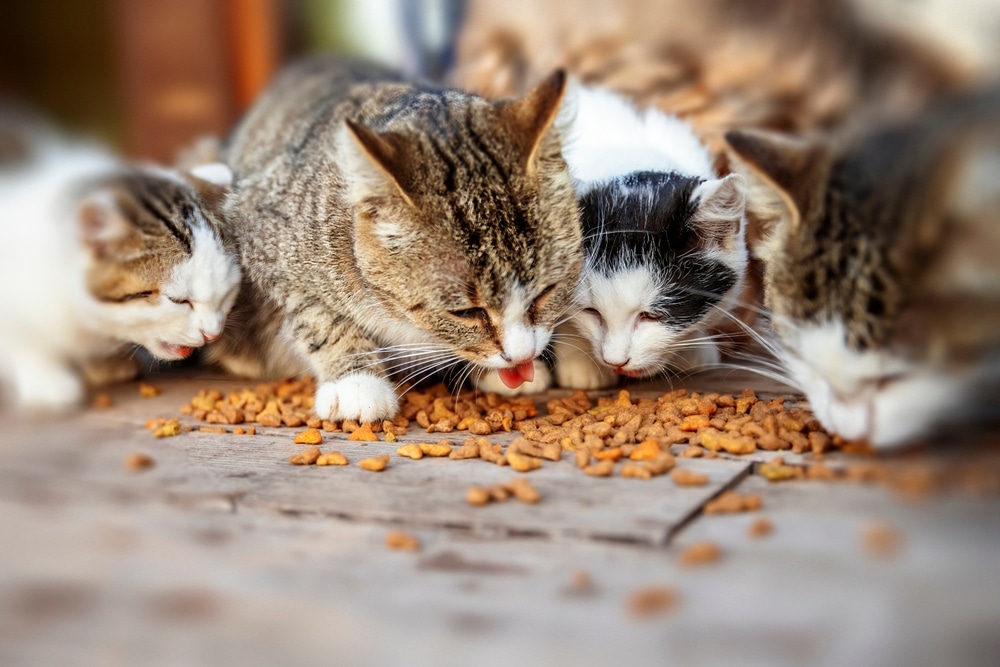
The firm’s latest Miami Herald “Real Estate Counselor” column was authored by Michael L. Hyman. The article, which is headlined “Feeding Stray Cats in Your Community? The Association May Have Something to Say,” is in response to a recent Reddit post about a resident of a Florida condominium community who refuses to stop feeding stray cats. Such feedings typically run afoul of associations’ governing documents and their rules and regulations due to the potential nuisances, unsanitary conditions, property damage, and liabilities that feral cats and other animals can create, but enforcement actions often prove to be lacking and ineffective.
Michael’s column reads:
. . . A recent post by a Florida condominium association unit owner in the popular Reddit r/HOA forum illustrates the challenges that such feedings present. It explains that the resident’s feedings are against the rules and the association has repeatedly addressed it with her, “but she simply does not care.”
The post reads:
“At this point, several cats regularly roam the property and parking lots. Some look sickly and completely feral. They get on residents’ cars, congregate around the property, and have become a significant nuisance.
“The association installed trail cameras to document who was feeding them. She complained about the cameras and now apparently knows where they are, so she just avoids them and continues feeding the cats elsewhere. Violations and fines do not seem to deter her at all.
“We have also contacted animal control, and they essentially will not do anything about the cats.”
The Redditor concludes by indicating they do not wish to harm the cats, but allowing sick strays to continue multiplying is bad for the animals and they are seeking solutions after fines have proven to be ineffective.
Florida law has specific statutory provisions that address feral and free-ranging cats, which are considered domestic animals under state law that are protected by the animal cruelty statutes. Intentionally injuring or killing a cat is considered animal cruelty, which is punishable as a first-degree misdemeanor or a third-degree felony depending on the severity and intent of the act.
While there is no state law that prohibits feeding feral cats, there is also no law authorizing it. The process of humanely trapping the animals, spaying or neutering them, and returning them to their original location known as Trap-Neuter-Return is legal in the state, but it operates without a law explicitly authorizing or regulating it.
The Florida Fish and Wildlife Conservation Commission does not endorse TNR, and it is primarily concerned with cat colonies that are having a direct impact on wildlife. Management of cat colonies that are not having such an impact is left up to local municipalities, and some consider feral cats a public nuisance and allow their animal control officers to trap and remove them.
Some cities and counties have laws prohibiting the feeding of feral cats. A 2025 ordinance in Miami-Dade restricts the feeding of feral cats on commercial and public property, and each municipality in the county has the authority to establish and enforce its own regulations if they are more stringent.
For cases such as the one described in this recent post in which cats are being fed on private property within an association community, violation notices as well as cease and desist letters are the most common initial responses. They can be followed by an enforcement committee hearing and, if allowed under the governing documents and approved by the members, fines that are capped by law at $100 per violation and $1,000 in the aggregate. The deployment and use of cameras to capture proof of the illicit feedings may also be necessary.
Some municipalities have adopted ordinances affirmatively authorizing TNR and other maintenance programs for cat colonies in their jurisdictions, so association representatives should also contact their local animal services department to confirm whether an ordinance authorizes TNR or other efforts. They should also research and call any local nonprofit organizations that provide TNR and other services at no or low cost, and local wildlife and nuisance-animal trappers may be able to be retained to humanely trap and relocate the felines.
Associations may also be able to suspend the rights of those who flout the rules to use some or all community amenities. Being cut off from access to the pool, fitness center and tennis/pickleball courts can be more distressing for some residents than monetary penalties.
For communities contending with residents who are resolutely determined to continue feeding feral cats regardless of the consequences, the association may be left with no other recourse but to file a lawsuit seeking a court-ordered injunction to force their compliance. Pursuant to the statutes and governing documents, the association should also be able to recoup its attorney fees and legal costs for such efforts if it prevails. . .
Michael concludes his column by noting that such litigation should only be considered as a last resort once all other reasonable options have been exhausted. He writes that for most communities, the other recommended courses of action involving fines, suspensions, TNR efforts, and trapping/relocating the animals will hopefully solve the problem. But if not, the issue may be left to justice system.
Our firm salutes Michael for sharing his insights on this fairly common issue for Florida communities with the readers of the Miami Herald. Click here to read the complete article in the newspaper’s website. Our South Florida community association attorneys write about important matters for associations and other property owners in this blog and our Miami Herald column, which appears every two weeks on Sundays, and we encourage association directors, members and property managers as well as all property owners to click here and subscribe to our newsletter to receive our future articles.